 |
 |
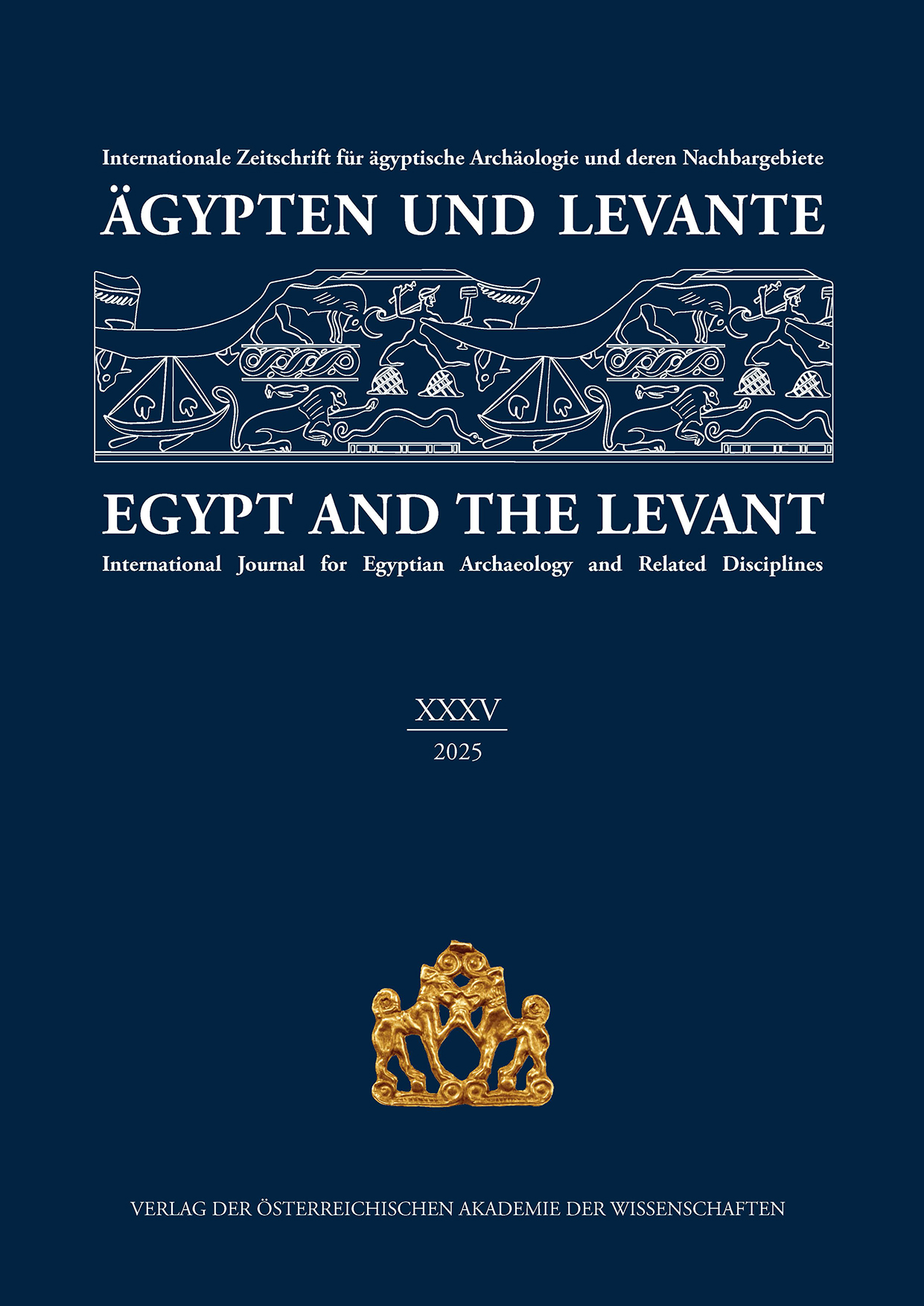
Ägypten und Levante XXXV
|
 Manfred Bietak ist emer. Professor für Ägyptologie an der Uni Wien |
|
Die internationale und interdisziplinär ausgerichtete Zeitschrift „Ägypten und Levante“, die einmal jährlich im Druck und online erscheint, wurde im Jahr 1990 von Manfred Bietak begründet, um den Forschungen zu den Kulturkontakten zwischen Ägypten und seinen Nachbarländern eine Publikationsplattform zu bieten. Das Themenfeld der Zeitschrift umfasst Berichte zu archäologischen Grabungen in Ägypten und dem gesamten Vorderen Orient mit dem Sudan, wie auch Artikel zu allen Aspekten der ägyptischen und nahöstlichen Archäologie, Geschichts- und Kulturwissenschaft. Der Fokus liegt auf der pharaonischen Zeit, jedoch sind sowohl Beiträge zur Ur- und Frühgeschichte der genannten Regionen wie auch zur nachpharaonischen Antike möglich, ebenso zu naturwissenschaftlichen Themen. Band 35 (2025) beginnt mit einem Vorbericht der Polnisch-Slowakischen Grabungen 2023 und 2024 in Tell el-Retaba. Daran schließen sich 15 Artikel von großer thematischer Bandbreite, d.s. eine Studie zum „Abnormalen hieratisch“ (H. Abdellatif), zur Landschaftsarchäologie im Sudanesischen Niltal (Budka et al.), ein Beitrag zur Diskussion um Megiddo und Thutmosis III (R. Bonfil), zu „Burial Kits“ in der südlichen Levante (S. Cohen), zu Blemmyer-Bestattungen in Berenike am Roten Meer (M. Gwiazda et al.), zum Beitrag von Dürren zum Niedergang des Hethiterreichs (G. Hagens), zu „Beer-Jars“ aus Tell el-Murra (M. Kazimierczek et al.), zu einem Salbgefäß mit Erwähnung eines Sothisaufgangs (R. Krauss), zu tragbaren Schreinen (M. Mumcuoglu). Es folgt Teil II einer Studie zu Proto-Sinaitischen Inschriften (H. Parker), die Untersuchung eines Metallbohrers aus der Negadezeit (M. Odler, J. Kmošek), eine Studie zur 14. Dynastie (J. Posch), zu dem Namensbestandteil „Maat“ im AR (G. Shapira), zu einem TY-Krug mit einem plastischem Frauenkopf (S. Shammas) sowie zu Krokodilsdarstellungen im prädynastischen Ägypten |
 |
Verlag der Österreichischen Akademie der Wissenschaften Austrian Academy of Sciences Press
A-1011 Wien, Dr. Ignaz Seipel-Platz 2
Tel. +43-1-515 81/DW 3420, Fax +43-1-515 81/DW 3400 https://verlag.oeaw.ac.at, e-mail: verlag@oeaw.ac.at |
|
|
|||||||||||||||||||
|
DATUM, UNTERSCHRIFT / DATE, SIGNATURE
BANK AUSTRIA CREDITANSTALT, WIEN (IBAN AT04 1100 0006 2280 0100, BIC BKAUATWW), DEUTSCHE BANK MÜNCHEN (IBAN DE16 7007 0024 0238 8270 00, BIC DEUTDEDBMUC)
|